
LSST Vera C Rubin Ethnographic Research
Qualitative research on the LSST community with Dr. Anissa Tanweer at the eScience Institute
Ethnographic research to understand the community dynamics and intricacies amongst the LSST Rubin community.
This ethnographic study was part of a larger research initiative by Dr. Anissa Tanweer.
Overview
My Roles/Responsibilities
I worked as an Ethnographic Researcher on this usability research project sponsored by Microsoft for their Power BI interface.
Context
The LSST as a project is a scientific undertaking to survey the night sky and understand the workings of the universe.
The study aimed to explore the astronomy community dynamics within the Rubin LSST astronomers, and data rights holders.
Impact
Duration
5 months (01/01/2023) - (03/06/2023)
Stakeholders
Principle Researcher and Team Lead
Method
Memo writing, Literature review, knowledge mapping, 1:1 intervew
Tools
Zoom, Google Workspace, Figma, Rev, Miro
Based on the final memo, my work was able to influence future research direction and confirm some hunches from initial research explorations.
Domain Context
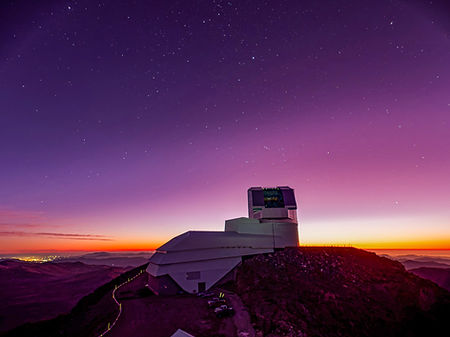

The goal of the Vera C. Rubin Observatory project is to conduct the 10-year Legacy Survey of Space and Time (LSST). LSST will deliver a 500 petabyte set of images and data products that will address some of the most pressing questions about the structure and evolution of the universe and the objects in it.
The ethnography was conducted to understand the Rubin astronomy community dynamics and understand data rights within and outside the community.
Research Questions
💠 What does the role of software in analyzing LSST mean for who gets included in the production of
💠 How does LSST membership, access to LSST data, and access to software tools mediate the production of scientific knowledge across various kinds of teams, experts, and institutions?
💠 How does the availability of LSST data open up new directions of inquiry in astronomy?
💠 What are the implications for how the field-and society more broadly—come to understand the universe?
Research Methods
1. Literature Review
Reviewed data in the form of academic publications, research journal articles, videos, LSST documents, to gain an understanding of the astronomy community, the LSST project, where it fits in the grand scheme of the exploration of the universe, and to form a rudimentary knowledge base of concepts related to astronomy and astrophysics.
2. Discussions
The review of the data led to group discussions with other contributors regarding the astronomy community, dynamics within it, and broadening of knowledge. This also facilitated the identification of themes with the potential to investigate further.
3. Memo Writing
The identification of themes enabled me to develop two detailed memos by analyzing these themes and other observations that I made. This facilitated in my exploration of the specific themes further.
4. Knowledge Mapping
This exercise using the Miro board helped me understand larger themes that other members of the research group came across as well. This specifically helped me identify an area of interest that I could leverage later or a deeper dive.
5. Interview
This interview was pivotal in my discovery and analysis for a crucial data rights question and also one which revolved around the larger astronomical community dynamics. This interview proved to be the backbone of my final memo for the research project and was a fulfilling experience in the research journey.
Analysis
My final memo included information synthesized by triangulating the data from all the methods. This led to a holistic approach for the artifact that helped shape the further research direction.
Knowledge
Mapping
Initial Memos
Discussions
Final Memo
Lit Review
Interview
Reflections
This project was an amazing learning experience and a window in to the world of the astronomy community. I spent hours reading in much detail about the fascinating concepts from the formation of stars, dark matter, and also extraterritorials! It was not only an enthralling academic experience, but I learned and could refine the valuable skills of knowledge formation, scripting interview guides, interviewing, qualitative coding, actor mapping, and memo writing that are helpful for a UX researcher. I thank Dr. Tanweer and her whole team for an unforgettable experience!
If time was not a constraint, I would conduct more interviews to talk to more people from the community. Employing a focus group in order to discuss concepts that would help the larger research goals with astrophysicist and astronomers would also have been a great mine of resources for analysis.